




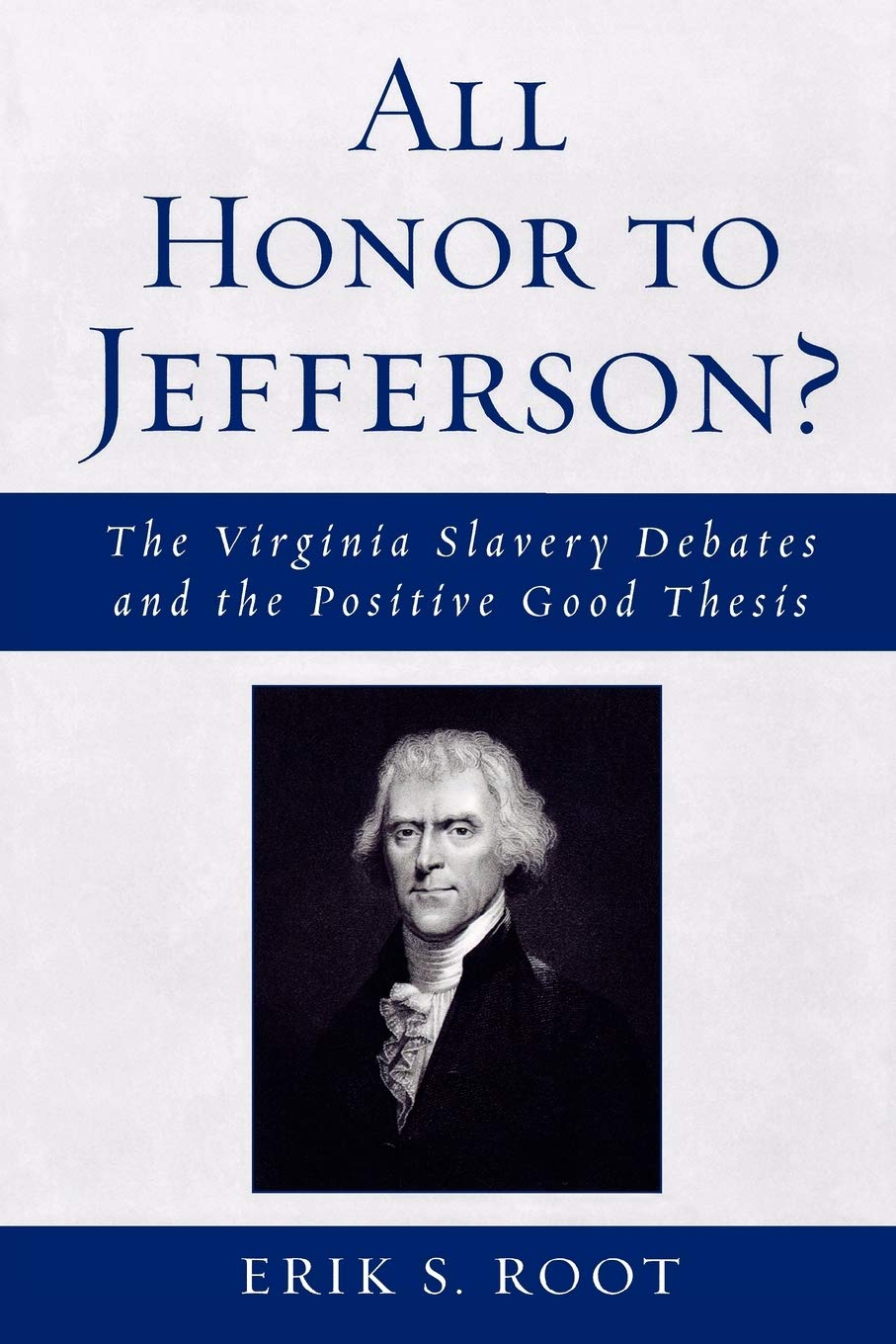
All Honor to Jefferson?: The Virginia Slavery Debates and the Positive Good Thesis

 4.3 (66 items)
 Limited Time Sale
US$53.70 cheaper than the new price!!
Free cash-on-delivery fees for purchases over $99
Product details
| Management number | 231852588 | Release Date | 2026/06/18 | List Price | US$35.80 | Model Number | 231852588 | ||
|---|---|---|---|---|---|---|---|---|---|
| Category | |||||||||
VirginiaOs most prominent statesman had a profound influence on the American Founding. Of the first five presidents elected, four of them were Virginians. Old Dominion thus held an influential position in the Union. The Founders held a reluctant tolerance of slavery, yet every leading Founder believed that slavery was wrong. They based this argument on the natural rights all men, all humans, possessed. With a natural rights understanding of the American Founding, it is an inescapable conclusion that slavery is a violation of those rights. However, the Founders expressed their distaste of the peculiar institution in different ways. All wrote privately about their aversion of the institution, and some took unmistakable public positions. Several also found ways to demonstrate implicitly their opinion about slavery. Because of its influential position, the political direction of Old Dominion was a bellwether for the Union. During the 1829-1832, in two instances, Virginians debated the future of slavery in their state. First, in the Constitutional Convention in 1829-30 they debated the existence of natural rights and whether those rights were a guide for statesmanship. During this convention there was an attack on natural rights that set the stage for the next great deliberation over slavery. Second, they explicitly discussed ending slavery in the House of Delegates after the Nat Turner insurrection in 1831-32. The Delegates of the day rejected the emancipation of the slaves as a moral and political necessity. Virginians had the opportunity to place slavery on the road to gradual extinction. They had an opportunity to reaffirm the principles of liberty, but ultimately that argument lost. The forces of self-interest defeated those who articulated the principles of the Declaration of Independence. This was solidified when Thomas Roderick Dew wrote his review of the debates in the House of Delegates. As a result of his arguments, the pro-slavery argument proceeded apace in Virginia with Dew being instrumental in the development of the Opositive goodO thesis. Read more
| ISBN10 | 0739122177 |
|---|---|
| ISBN13 | 978-0739122174 |
| Language | English |
| Publisher | Lexington Books |
| Dimensions | 6 x 0.75 x 9 inches |
| Item Weight | 1.15 pounds |
| Print length | 264 pages |
| Publication date | February 8, 2008 |
Bestseller ranking
UTV Brake Pedals






Customers who viewed this product also viewed
Abolition


Correction of product information
If you notice any omissions or errors in the product information on this page, please use the correction request form below.
Correction Request Form